





A study presented at the 2026 European Congress on Obesity found that people on GLP-1 medications average just 54 grams of protein per day — less than half the 100+ grams most need to protect their muscle mass. You're probably not surprised. The drug works exactly as intended: your appetite disappears, eating feels like work, and "just eat more protein" advice starts to feel absurd. This article gives you a protein-density-first food list, a minimum viable intake framework, and practical strategies built for the reality of eating almost nothing.
Why GLP-1 Users Are Getting Dangerously Low on Protein — And Why It Matters
Protein deficiency on GLP-1 medications isn't a willpower problem — it's a predictable consequence of how the drug works. Semaglutide (Wegovy, Ozempic) and tirzepatide (Mounjaro) suppress appetite so effectively that many users drop to 500–800 calories per day without trying. When caloric intake collapses that fast, the body doesn't just burn fat — it burns muscle too.
Research on rapid caloric restriction shows that without adequate protein intake, 25–40% of weight lost can come from lean mass rather than fat. That matters beyond aesthetics: muscle drives your resting metabolism. Lose enough of it and you'll burn fewer calories at rest, making long-term weight maintenance significantly harder — even after stopping the medication.
The 2026 ECO data makes this concrete. At 54g/day, the average GLP-1 user is getting roughly half the protein they need. The result isn't dramatic in the short term — you won't notice muscle loss week to week — but it compounds. Getting protein right now is one of the highest-leverage things you can do while on this medication.
How Much Protein Do You Actually Need on GLP-1?
The evidence-based target for GLP-1 users is 1.2–1.6g of protein per kilogram of body weight per day. Use the lower end on days when eating feels manageable; treat 1.2g/kg as your non-negotiable floor on difficult days.
| Body weight | Min. daily protein (1.2g/kg) | Optimal daily protein (1.5g/kg) |
|---|---|---|
| 59 kg | 71g | 88g |
| 173 kg | 88g | 109g |
| 86 kg | 104g | 130g |
| 100 kg | 120g | 150g |
The floor matters most. On days when you can barely eat — especially during the first two weeks after a dose escalation — hitting 70–80g is a win. Don't measure those days against an ideal; measure them against zero.
The Best High-Protein Foods for GLP-1 Users — Ranked by Protein Density
The standard advice to "eat more chicken and eggs" is designed for people who can eat a full plate. When your stomach feels full after three bites, what matters is protein per small volume — not protein per 100g. The foods below are ranked with that constraint in mind.
| Food | Serving size | Protein | Why it works for GLP-1 users |
|---|---|---|---|
| Canned tuna / salmon | 85g (½ can) | 20g | No cooking, highest density by volume |
| Chicken breast (soft-cooked) | 85g | 26g | Best on good-appetite days; very dense |
| Greek yogurt (plain, full-fat) | 170g | 17g | Soft, no chewing, goes down easily |
| Skyr / Icelandic yogurt | 150g | 15–17g | Thick, satisfying per spoonful |
| Protein shake / powder | 1 scoop in water | 20–25g | Liquid — works when solids feel impossible |
| Cottage cheese | 110g | 13g | Mild taste, high protein per spoon |
| Eggs (soft-scrambled) | 2 large | 12g | Fast, 2–3 bites is still a useful amount |
| Edamame | 85g | 9g | Cold, easy to eat slowly |
| Silken tofu | 100g | 8g | Very soft texture, easy on nausea |
| String cheese / cheese stick | 1 stick | 7g | Zero prep, portable, fridge-ready |
On days you can barely eat, these five foods are your priority: protein shake, Greek yogurt, cottage cheese, canned tuna, soft-scrambled eggs. Between them, you can hit 80g+ without cooking a single proper meal.

Easy High-Protein Meals for GLP-1 Users (Tiny Portions, Real Protein)
These aren't meals in the conventional sense. They're protein delivery formats sized for a stomach that signals full after a few bites — 100–250 calories each, 12–30g protein, minimal prep.
- Soft-scrambled eggs + a spoonful of cottage cheese — 24g protein, 2 mins. The combination is soft, quick to eat, and goes down well even when appetite is low.
- Greek yogurt with a scoop of protein powder stirred in — 30g protein, 0 mins.
- Tastes better than it sounds; vanilla protein powder works best.
- Canned salmon over half an avocado — 22g protein, 1 min. No cooking, no heat, easy texture.
- Warm edamame with sea salt — 18g protein (1 cup), 3 mins from frozen. Cold or warm both work; eat a few at a time.
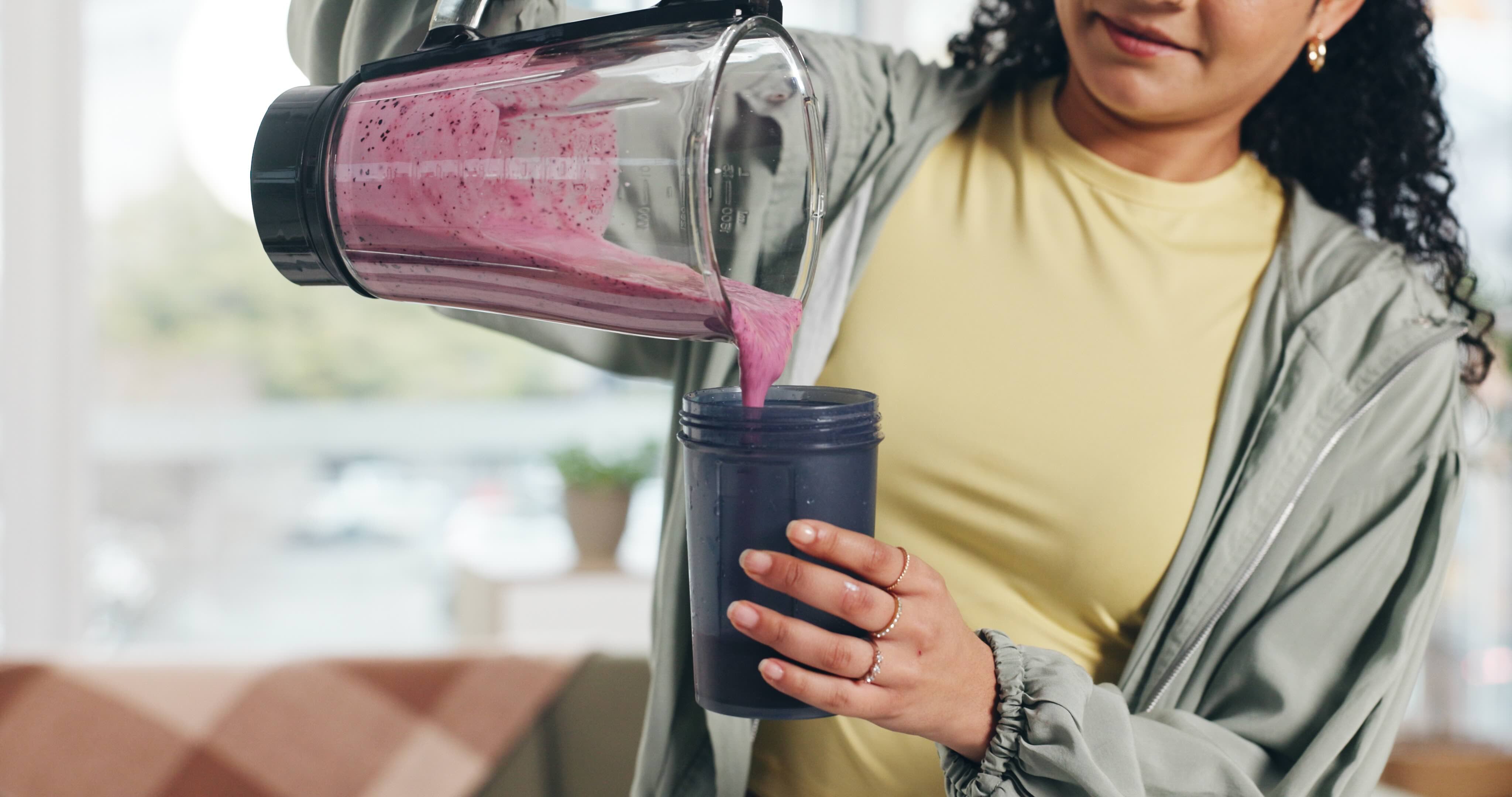
- Silken tofu blended into a protein smoothie — 25g protein, 3 mins. Adds creaminess with no detectable flavour; use with a banana and protein powder.
- String cheese + a small handful of almonds — 12g protein, 0 mins. Not a meal, but a useful protein bridge between eating moments.
- Small bowl of skyr with a spoonful of almond butter — 19g protein, 0 mins. Higher calorie density per spoon than Greek yogurt, useful when volume is very limited.
When You Can Barely Eat: A Protein Strategy for Zero-Appetite Days
Zero-appetite days are most common in the first two weeks after a dose increase. Your hunger signals are suppressed, nausea may be present, and eating feels genuinely unpleasant. This is not the time for meal planning — it's the time for a minimum viable strategy.
Four rules for near-zero-appetite days:
- Liquid protein first, morning priority. Nausea tends to be lowest in the morning. A protein shake before anything else secures 20–25g before the day gets harder.
- Protein before anything else at every eating moment. If you can manage three bites, make them protein. Don't let crackers or fruit take that space.
- Use a timer, not hunger. Your hunger signals won't return on their own. Set a reminder every 2–3 hours to have a small protein moment — not a meal, just a few spoonfuls or a drink.
- Keep zero-prep proteins visible and ready. String cheese on a shelf at eye level. A pre-mixed shake in the fridge. Cottage cheese in a small pot. When eating feels effortful, friction is the enemy.
Your Minimum Viable Protein Day:
For days when eating almost nothing still needs to include enough protein
| Time | Food | Protein |
|---|---|---|
| 7am | Protein shake (1 scoop in water) | 25g |
| 10am | Greek yogurt (¾ cup) | 17g |
| 1pm | Canned tuna on 2 crackers | 20g |
| 4pm | 2 × string cheese | 14g |
| 7pm | 2 soft-scrambled eggs | 12g |
| Total | 88g |
Every item above requires minimal or zero cooking. You can achieve this on a day when eating feels genuinely difficult.
Protein Supplements on GLP-1 — Do Shakes and Powders Count?
Yes — completely and without qualification. A 21g ready-to-drink shake counts exactly as much as 21g from chicken breast. On days when solid food feels impossible, a shake isn't a compromise; it's the right tool for the situation.
When choosing a protein powder or ready-to-drink shake, look for: at least 20g protein per serving, under 5g of sugar, and a short ingredient list. Whey isolate is absorbed quickly and well-tolerated by most people; plant-based blends (pea + rice) are a solid alternative if dairy is a problem. Whey concentrate can cause bloating in some GLP-1 users — if that happens, switch to isolate.
What to avoid: meal replacement bars marketed as "high protein" that deliver 8–10g with 20g+ of sugar, and flavoured protein drinks with more sugar than protein. Check the label rather than the front of the pack.
The best time to use a shake is first thing in the morning (when nausea is typically lowest) and during dose escalation weeks when appetite is at its most suppressed.
What to Avoid — Foods That Crowd Out Protein on GLP-1
When you can only eat 500–700 calories, every bite is a decision. These foods aren't dangerous — but eating them first means you'll hit your fullness ceiling before you've had any meaningful protein.
- Crackers, rice cakes, chips — fill the stomach quickly with near-zero protein. If you eat them, eat them after protein, not before.
- Fruit juice — liquid calories with no protein that also displace water intake. Choose whole fruit if you want something sweet.
- Bread-heavy meals — two bites of a sandwich is mostly bread. The protein in the filling rarely survives the volume constraint.
- "Healthy" granola bars — typically 4–5g protein alongside 18–25g sugar. The marketing is misleading; these are not protein sources.
- Plain salads as a first course — high fibre volume fills a small stomach very quickly, leaving no room for protein. If you want salad, add protein first and eat it first.
The rule is simple: eat protein first, everything else second. This isn't about avoiding these foods permanently — it's about sequencing your tiny appetite correctly.
A Simple Protein Tracker for GLP-1 Users (No App Needed)
You don't need to count macros or download anything. This framework gives you a protein target for each eating moment across the day — adapt it to however many eating moments feel manageable.
Target protein
20–25g
Example food
Protein shake or Greek yogurt
Target protein
10–15g
Example food
Cottage cheese or string cheese
Target protein
20–25g
Example food
Canned fish or soft-scrambled eggs
Target protein
10g
Example food
Skyr or edamame
Target protein
15–20g
Example food
Soft-cooked chicken or silken tofu
80–100g
If you can only manage three eating moments instead of five, consolidate: prioritise morning, midday, and evening, and aim for 25–30g at each. The distribution matters less than the daily total.