
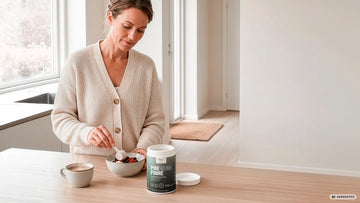






You're eating less than you have in years — and somewhere in the back of your mind, you've started wondering whether the weight you're losing is actually fat, or whether your body is quietly dismantling muscle you worked hard to build. That concern is worth taking seriously. Protein is the single nutrient that determines whether GLP-1 weight loss comes from fat or from muscle — and most people on these medications aren't getting enough of it.
Why Protein Becomes the Critical Nutrient the Moment You Start a GLP-1
When you dramatically reduce your calorie intake — which is exactly what GLP-1 medications like semaglutide (Wegovy, Ozempic) and tirzepatide (Mounjaro) are designed to help you do — your body faces a supply problem. It needs energy to keep functioning, and if you're not eating enough, it will find that energy somewhere. The question is where.
In an ideal scenario, it pulls almost entirely from fat stores. But the body isn't that tidy. When calories drop sharply, it often turns to muscle tissue as well, breaking it down for fuel in a process called muscle protein catabolism. This isn't a minor inconvenience — muscle is metabolically active tissue. Losing it slows your resting metabolism, makes future weight maintenance harder, and leaves you weaker and more fatigued than you need to be.
Research consistently shows that higher protein intake during calorie restriction significantly reduces muscle loss. A landmark study by Leidy et al. (2015, American Journal of Clinical Nutrition) found that increasing protein intake during weight loss preserves lean body mass and improves body composition outcomes — even when total calories are substantially reduced.
GLP-1 medications can suppress appetite by 30–50% from your normal intake. That's a dramatic reduction. And when appetite disappears, protein — which requires effort to prepare and consume — is usually the first thing to go. Most people on a GLP-1 who aren't paying attention end up eating crackers, soup, and whatever requires the fewest bites. Protein is the nutrient that closes the gap between weight loss and fat loss.
How Much Protein Do You Need on a GLP-1? Your Target by Body Weight
The evidence-based target for protein during active weight loss on a GLP-1 is 1.2–1.6 g of protein per kilogram of body weight per day (roughly 0.55–0.73 g per pound). This range, supported by Wolfe et al. (2017, Journal of the American College of Nutrition), is meaningfully higher than general population recommendations — because you're not in a general population situation. You're in active, significant weight loss.
The table below does the calculation for you. Find your current body weight and read across.
| Body weight | Min. daily protein (1.2 g/kg) | Optimal daily protein (1.6 g/kg) |
|---|---|---|
| 55 kg | 66g | 88g |
| 68 kg | 82g | 109g |
| 79 kg | 95g | 127g |
| 91 kg | 109g | 146g |
| 102 kg | 122g | 163g |
| 113 kg | 136g | 181g |
Minimum = the floor that prevents significant muscle loss. Optimal = the target for active exercisers or anyone doing resistance training. If you're sedentary right now, aim for minimum. If you're moving regularly, aim for optimal.
The Difference Between Minimum Protein and Optimal Protein on a GLP-1
The minimum (1.2 g/kg) is your non-negotiable floor — the amount below which meaningful muscle loss becomes likely during caloric restriction. The optimal range (1.2–1.6 g/kg) is what research supports for people in active fat loss who want to preserve or even build lean tissue.
- Floor (1.2 g/kg): Sedentary individuals; prioritise reaching this before worrying about anything else.
- Optimal (1.4–1.6 g/kg): Anyone doing resistance training, walking regularly, or trying to preserve muscle definition during faster weight loss phases.
Does Your Protein Target Change as You Lose Weight on a GLP-1?
Yes — and this is something no other article on this topic addresses. Your protein target is tied to your current body weight. As you lose weight on a GLP-1 (the STEP-1 trial published in NEJM showed average losses of ~15% of body weight on semaglutide), your daily protein target decreases proportionally.
The practical rule: Recalculate your target every 10 lbs lost. A person who starts at 200 lbs and loses 30 lbs over six months should be recalculating three times — not still targeting the intake they needed at their starting weight.
What Does 25–30 Grams of Protein Actually Look Like? (Per-Meal Visual Guide)
Every article tells you to eat "20–30 g of protein per meal." Almost none shows you what that actually looks like on a plate. Here's your reference guide.
| Food | Protein | Visual portion cue |
|---|---|---|
| Chicken breast (cooked) | 26g | A deck of cards — roughly 85g |
| Greek yogurt (plain, full-fat) | 17g | One standard 170g pot |
| Cottage cheese | 14g | Half a cup, about the size of your fist |
| Eggs | 18g | 3 large eggs |
| Canned tuna (in water) | 25g | One standard 85g can, drained |
| Salmon (cooked) | 22g | A portion slightly smaller than your palm |
| Edamame (shelled) | 17g | 150g |
| Tofu (firm, cooked) | 20g | A portion about the size of a deck of cards |
| Lentils (cooked) | 18g | 200g |
| Protein shake | 20–25g | One scoop in 250–300ml liquid |

The goal is to build one item from this list into every meal and most snacks. When appetite is low, the portion sizes above are manageable — you're not being asked to eat a full chicken breast in one sitting.
How to Hit Your Protein Target When GLP-1 Has Killed Your Appetite
This is the section most people actually need. You know you're supposed to eat more protein. The problem is that three bites of chicken and your stomach has already sent the "done" signal. Here's how to work with that reality rather than against it.
Protein-First Eating: Why the Order of Your Meal Matters on a GLP-1
GLP-1 medications accelerate satiety — you feel full faster and that fullness lasts longer. What you eat first at any meal is, in practical terms, what you're most likely to actually finish. Protein should always be that thing.
This strategy is sometimes called "protein-first eating," and it's particularly well-suited to GLP-1 users because it doesn't ask you to eat more — it just changes the sequence.
How to apply it:
- When your plate arrives (or you've assembled your meal), eat the protein component first before touching vegetables, carbs, or anything else.
- At a restaurant: ask for the protein as a starter, or simply eat it before picking up the bread.
- With snacks: if you're combining cheese and crackers, eat the cheese first

High-Protein, Low-Volume Foods That Work When You're Nauseous
Nausea is most common in the first four to eight weeks on a GLP-1, and again after each dose escalation. During these windows, the foods that are technically highest in protein — grilled chicken, fish, red meat — are often the hardest to tolerate. Strong smells and dense textures become the enemy.
These options tend to be better tolerated when nausea is active:
- Greek yogurt — cold, smooth, no cooking smell required, 17 g per serving
- Cottage cheese — mild, cool, easy to eat slowly, 14 g per half-cup
- Bone broth — warm liquid, gentle on the stomach, 6–10 g per cup depending on brand
- Soft-boiled or scrambled eggs — minimal smell when cooked gently, 18 g for three eggs
- Edamame — cool, mild, requires minimal prep, 17 g per cup
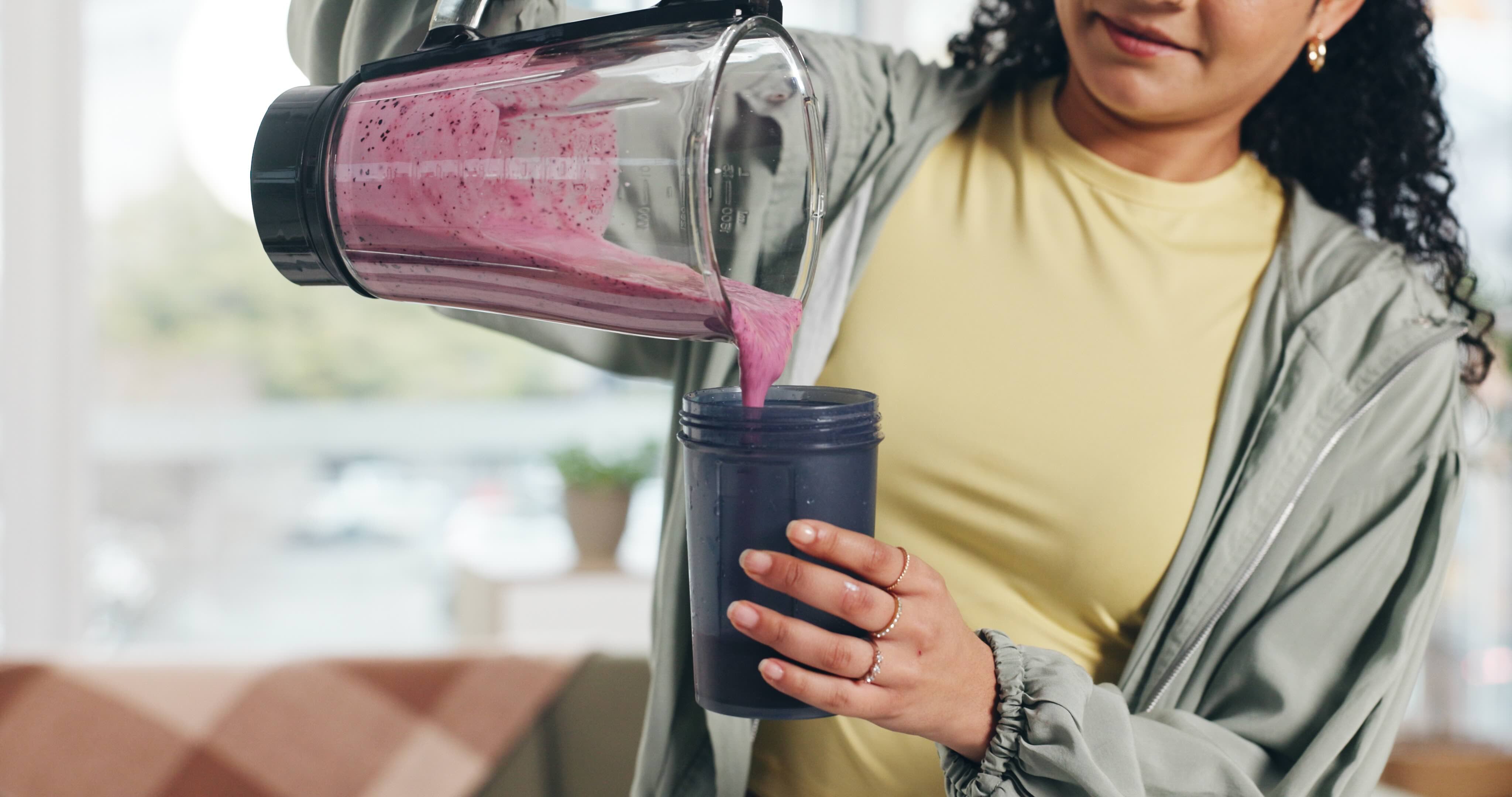
- Protein smoothie (blended cold) — no cooking smell, easy to sip slowly, 20–25 g per serving
When eating feels this difficult, getting any protein in is more important than getting the perfect protein in. Cold, smooth, and mild are your filters.
Liquid Protein on a GLP-1: When Solid Food Won't Cooperate
Liquid protein is not a workaround or a compromise — it's a legitimate and often superior strategy during periods of high appetite suppression. Liquids are digested differently, require no chewing, and can be consumed in small amounts throughout the day rather than in discrete meals.
Practical liquid protein options:
- Protein powder in water or milk — 20–25 g per scoop; choose unflavored or mildly flavored options if nauseous.
- Greek yogurt blended with berries — 15–20 g depending on serving size; serves as a meal or substantial snack.
- Bone broth sipped across the morning — 6–10 g per cup; adds meaningful protein with minimal volume.
- Blended lentil or bean soup — 15–18 g per serving; warm, easy to make in batches, freezes well.

If structured meal replacements or ready-to-drink protein options work better for your schedule, they can also bridge the gap on days when cooking isn't realistic — look for options with at least 20 g protein and minimal added sugar.
A Sample High-Protein Day on a GLP-1 (Under 1,500 Calories, 100+ Grams of Protein)
Here's what a full day of eating looks like when you're hitting your protein target at a significantly reduced calorie intake. This is a template, not a prescription — adjust portions to your current appetite and body weight target from the table above.
| Time | Meal | Protein |
|---|---|---|
| Breakfast | 3 scrambled eggs + 15g cream cheese | 20g |
| Mid-morning | 170g plain Greek yogurt + handful of blueberries | 17g |
| Lunch | One 85g can of tuna on cucumber slices + half an avocado | 26g |
| Afternoon | 100g cottage cheese + a few cherry tomatoes | 12g |
| Dinner | 100g salmon fillet (baked) + steamed broccoli | 26g |
Total: ~101 g protein / ~1,150 calories
This isn't a large-volume day of eating. None of these portions are difficult to manage when appetite is suppressed. The protein adds up because each eating occasion has been anchored with a high-protein item rather than defaulting to whatever requires the least effort.
The Muscle Loss Risk: Why Protein Alone Isn't Enough on a GLP-1
Protein gives your body the raw material to maintain muscle tissue. But material alone isn't enough — your body also needs a reason to hold onto muscle rather than break it down. That reason is use.
Resistance training — lifting weights, bodyweight exercises, resistance bands — sends a clear physiological signal: this muscle is needed. Without that signal, even adequate protein intake may not fully prevent muscle loss during aggressive caloric restriction. Research suggests that combining higher protein intake with resistance exercise produces significantly better lean mass retention during weight loss than protein alone.
You don't need to become a competitive weightlifter. Two to three sessions per week of moderate resistance training — squats, rows, presses, hinges — is enough to meaningfully shift the balance toward fat loss rather than muscle loss. Even walking with intent and carrying groceries counts as resistance input for deconditioned individuals starting out.
Protein builds the material. Resistance training tells your body to use it.
Protein on Wegovy vs Ozempic vs Mounjaro: Does Your Medication Change Your Target?
The short answer is no — your protein target is determined by your body weight and activity level, not by which GLP-1 you're taking. The formula in the table above applies equally whether you're on semaglutide (Ozempic, Wegovy) or tirzepatide (Mounjaro).
Where the medications do differ is in the depth of appetite suppression you might experience, which affects how challenging it is to hit your target in practice:
- Ozempic (semaglutide): Moderate appetite suppression; most users find eating manageable with some adjustment.
- Wegovy (semaglutide): Stronger suppression at the higher maintenance dose; practical protein strategies become more important, especially in the first 12–16 weeks.
- Mounjaro (tirzepatide): Dual GIP/GLP-1 mechanism; often produces the most significant appetite suppression in clinical experience; liquid protein strategies and protein-first eating tend to be especially useful.
The target doesn't change. The effort required to hit it might.