



Quick answer: A meal replacement shake can be a practical option when it's made to replace a meal – it should carry a full nutrition declaration and be used alongside real food, not instead of it. What matters is what's in it, how you use it and whether it suits you.
Last updated: 15 October 2026
"Shake" can mean anything from a protein drink to a nutritionally designed meal. Here's how to tell them apart.
What is a meal replacement shake?
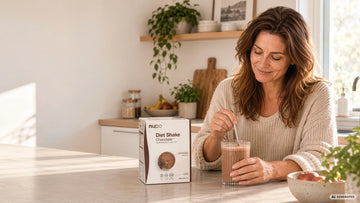
A meal replacement shake is a drink designed to take the place of a meal, with its own nutrient profile. That's different from a protein shake, which is mainly a source of protein and isn't designed as a whole meal.
Meal replacement or total diet replacement?
These are not the same. Total diet replacement (TDR) products are regulated separately: they must provide 600–1,200 kcal a day, 75–105 g protein, and carry labelling that they are only for healthy overweight or obese adults aiming for weight reduction, and shouldn't be used for more than 8 weeks without healthcare advice. The label may not refer to the rate or amount of weight loss (Commission Delegated Regulation (EU) 2017/1798, as retained in UK law). A single meal replacement used instead of one meal is something different from a TDR plan.
What to check on the label
- A full nutrition declaration, including vitamins and minerals.
- The protein source and amount per serving.
- Fibre and sugar.
- Instructions on how many servings and for how long.
- Warnings for pregnancy, breastfeeding, children and medical conditions.
How to use a shake alongside real food
The NHS Eatwell Guide still describes the foundation: lots of fruit and veg, higher-fibre starchy foods, some protein foods and dairy, balanced over a day or a week (NHS, The Eatwell Guide). A shake can fit on a day when time is short – but your other meals still do most of the work. Need meal ideas? See our high protein dinner ideas. You can also browse our ready to drink shakes, protein bars, meal replacements and diet soups.
Who should check with a professional first?
If you're pregnant or breastfeeding, under 18, have a medical condition (including diabetes or kidney disease), have an eating disorder or take medication, speak to your GP or a registered dietitian before using meal replacements. A shake isn't designed to be your only food for long periods unless a healthcare professional has advised it.
FAQs
Are meal replacement shakes healthy? It depends on the product and how you use it. Look for a full nutrition declaration and use it alongside varied meals.
Can a protein shake replace a meal? A protein shake isn't designed as a whole meal; a meal replacement is. Check the label.
Do meal replacement shakes work? That depends on what you want from them and on your overall diet; no shake works on its own. Speak to your GP if you're thinking about weight management.
Sources
- Legislation.gov.uk: Commission Delegated Regulation (EU) 2017/1798 (accessed 15 October 2026)
- NHS: The Eatwell Guide