
Find the solution that fits your phase and your goals while on weight loss medication.
When appetite changes
You feel full quickly and find it difficult to eat “properly.”
Your appetite is reduced, and it’s harder to get enough protein and fibre.
Your energy levels fluctuate.
Poor or insufficient nutrition can leave you feeling drained.
Digestive discomfort.
You may experience nausea or stomach issues while on weight loss medication.
Concern about regain.
You worry about slipping back into old habits once your GLP-1 treatment ends.
Less volume. More nutrition.
When appetite is low, the quality of what you eat becomes more important than the quantity.
One Meal is:
Smaller portions — with complete nutritional support
Easy to consume when appetite is reduced
Designed to help reduce the risk of nutrient gaps
Balanced in protein and fibre for steady energy
Fewer worries. More control. Structured support — during and after weight loss medication
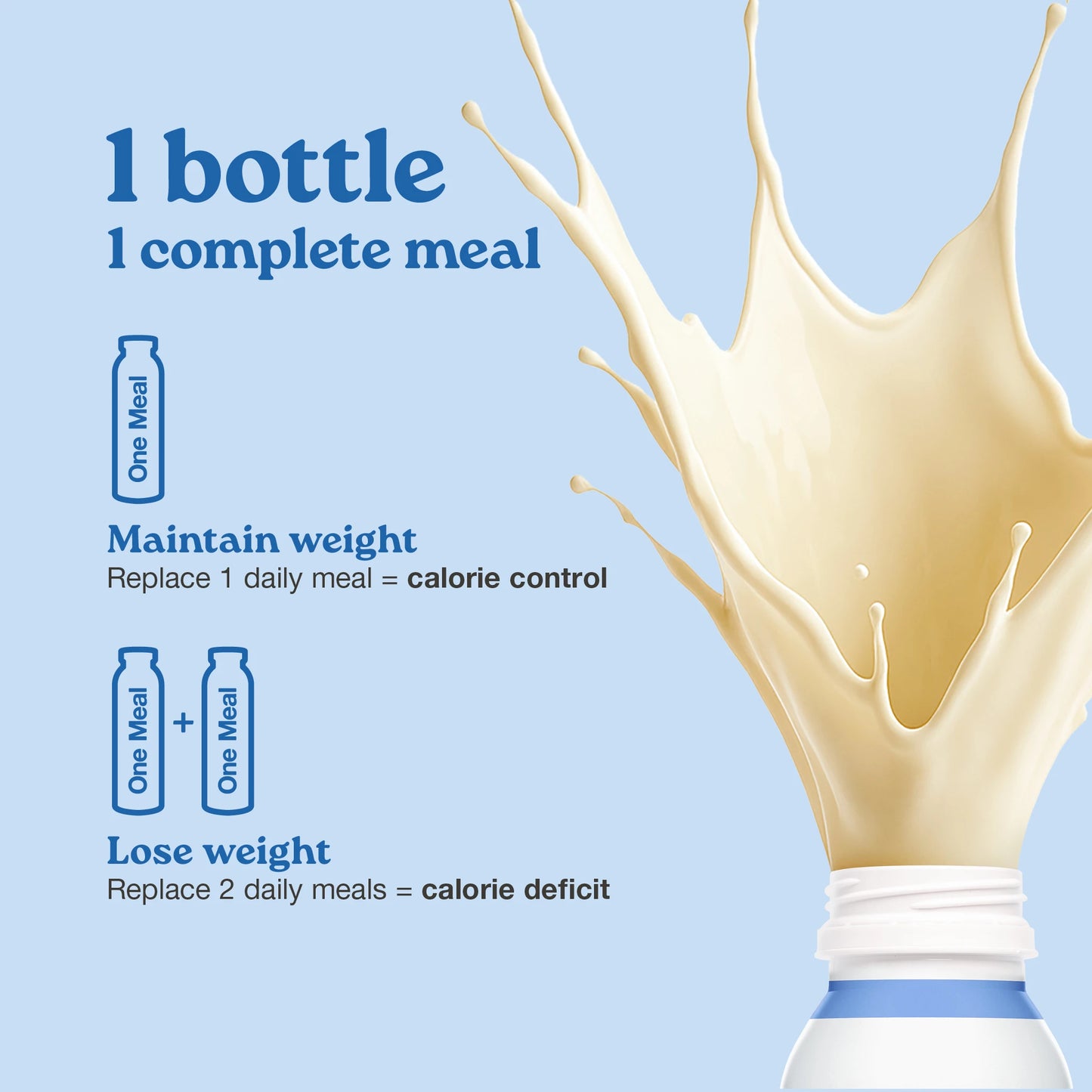
1 One Meal = 1 complete meal
You’ve achieved something. It deserves a plan.
When medication stops, appetite gradually returns.
Not overnight — but steadily.
This is where the difference lies.
Results don’t maintain themselves.
They’re maintained with structure.
With a plan, you can protect what you’ve achieved — without starting over.
Not dramatic.
Not alarming.
Just simple and realistic.
How to put it into practice
The transition doesn’t need to be complicated. It just needs direction.
✔ On GLP-1? Replace 1–2 main meals per day with One Meals — complete nutrition in controlled portions.
✔ Prioritise quality over quantity
When you eat less, nutrient content matters more. Every One Meal contains protein, fibre, vitamins and minerals.
✔ Create stability
Small, consistent meals bring structure and calm to your day.
✔ After stopping medication
Continue with one structured One Meal daily during the transition phase.
Give your body time to rebalance.
Many fear regaining weight. Few talk about what comes next. We do.
Taster Pack Ready-to-Drink
Our Ready-to-Drink shakes are designed to fit into life on weight loss medication (GLP-1), where one meal should bring stability — not trigger the next wave of hunger. Balanced, convenient and easy to use when everyday decisions feel harder.
One bottle. One meal. No guesswork.
This is Smart Food.

Why does One Meal work so well?
One Meal products are designed to replace one or two of your daily meals — depending on your needs and how much structure you prefer.
Each portion provides a balanced combination of protein, fibre, vitamins and minerals, helping you stay nutritionally supported — even when you’re eating less.
If you’d like to try One Meal and discover the flavours that suit you best, start with one of our taste packs.
One Meal – Flexible support both during and after weight loss medication
✔ Complete meals with protein, fibre, vitamins and minerals.
✔ Low in calories, high in protein.
✔ An easy way to create structure and consistency.
✔ A practical way to support balance — during and after GLP-1.
From flexibility to a fully structured plan with Nupo Diet
One Meal offers flexibility and simplicity.
Nupo Diet is a more complete system, designed for periods when you want clearer structure, simpler planning and fewer daily decisions.
You’ll find a range of structured meal plans within the Diet programme — a strong partner to GLP-1 when you’re looking for full nutritional support with controlled calorie intake.
Complete nutrition. Structured support. Less guesswork.
Collapsible content
How do I get enough nutrients if I’m eating much less than before?
When appetite decreases, meals often become smaller. One Meal is designed specifically for this: small, complete meals with protein, fibre, and a full range of vitamins and minerals. This makes it possible to eat less while still meeting your body’s nutritional needs.
Is it normal to have low energy when eating less?
Reduced energy can occur when your nutritional needs aren’t fully met. Small, nutrient-dense meals like One Meal can help support more stable energy levels by providing a balanced combination of protein, fibre and essential vitamins.
How many One Meal products can I have in a day?
1–2 One Meals per day is most common when appetite is reduced. This provides a good balance between nutrition and flexibility, allowing you to complement with small, regular meals.
Many people use One Meal as a consistent part of their daily routine because it provides reliable nutrition in a small portion. This can make it easier to maintain your weight after significant weight loss.
What should I do if my appetite varies a lot from day to day?
This is common in the transition phase. A flexible approach is to combine regular meals on days when your appetite is stronger with One Meal on days when it is lower.
Is One Meal a snack or a meal?
One Meal is a complete meal. It contains protein, fibre, and a full range of vitamins and minerals. It is not a snack and should not be used as one — unless you are very physically active, in which case it can be used as a substantial snack.
How do I know if I’m getting enough protein?
One Meal contains a documented amount of protein per portion. This makes it easier to ensure you’re getting enough, even when your overall food intake is low. If you find it difficult to eat larger meals, 1–2 One Meals per day can cover a significant part of your protein needs.
Are small meals enough to cover my energy needs?
If you choose meals with high nutrient density, smaller portions can still cover both your energy and nutritional needs. One Meal is formulated to support this — even when overall intake is reduced.
Why is fibre important when appetite decreases during weight loss medication?
When you’re in a weight loss programme with GLP-1 and eating less than usual, fibre becomes even more important. Many people experience slower digestion and reduced natural fullness, and fibre plays a key role here.
Fibre helps you to:
Support regular digestion
Fibre supports normal digestive function and may help reduce the risk of constipation, which some people experience when eating fewer and smaller meals.
Promote longer-lasting fullness
Fibre provides a steady and comfortable feeling of fullness — even in small portions. This can make it easier to avoid grazing and stay focused on your goals.
Improve the balance of smaller meals
When appetite is reduced, it’s important that each meal delivers as much nutrition as possible. One Meal can be a practical solution: each bar, shake or cookie contains both fibre and protein, providing more complete and satisfying nutrition in one portion.
An easy everyday choice
Nupo One Meal products are convenient, portion-controlled and provide a balanced combination of fibre, protein, vitamins and minerals — without requiring the appetite or energy for larger meals.
How can protein support your weight management goals?
When appetite decreases during GLP-1 treatment, many people naturally eat less than usual. That’s why getting enough protein becomes especially important — for your body, your energy levels and healthy weight management.
Protein helps you to:
Maintain muscle mass
During weight loss, the body may use muscle tissue for energy if protein intake is too low. Adequate protein helps preserve muscle mass, so more of the weight loss comes from fat rather than muscle.
Stay fuller for longer
Protein is more satiating than many other nutrients. This can be helpful when taking GLP-1 and eating less, as the fullness from protein may make it easier to avoid grazing and support your goals.
Support balance in smaller meals
When meals are already small, it’s important that they are nutrient-rich. One Meal products provide a complete combination of protein, fibre, vitamins and minerals in one portion.
A simple way to get protein each day
With Nupo One Meal shakes, bars and cookies, you have a quick and practical way to increase your protein intake — without needing large meals or complicated meal planning.
How does fibre influence weight management?
Fibre plays an important role when you’re aiming for healthy, stable weight management — especially if your appetite decreases or your meals become smaller than usual.
Supports normal digestion
When you eat less, digestion can slow down. Fibre helps maintain regular digestive function and may reduce the risk of constipation.
Provides longer-lasting fullness
Fibre adds volume and promotes satiety, making it easier to keep portion sizes smaller and avoid unnecessary snacking. This can be particularly helpful when you’re eating fewer and smaller meals.
Helps maintain steady energy levels
A fibre-rich diet can support a more gradual release of energy, helping you avoid cravings and sudden dips in energy throughout the day.
A practical solution for smaller meals
When you’re eating less, it’s important that each meal delivers as much nutrition as possible. Nupo One Meal contains fibre, protein, vitamins and minerals in one portion — providing a balanced and satisfying option, even when appetite is reduced.
What should I be aware of when losing weight with GLP-1 treatment?
When appetite decreases during GLP-1 treatment, it becomes especially important to ensure your body still receives the nutrients it needs — even if your meals are smaller. Many people find they eat significantly less than usual, which can affect energy levels, fullness and overall nutritional balance.
To support healthy and stable weight management, focus on:
Nutrient-rich meals in smaller portions
Choose meals that provide protein, fibre, vitamins and minerals — even in modest amounts. This helps maintain muscle mass and supports steady satiety.
Practical, balanced meal solutions
When appetite is low, it can be difficult to eat enough or plan nutrient-dense meals. Complete meal replacements from Nupo can be a simple way to support adequate nutrient intake — without large portions.
Fibre and protein for better satiety
Fibre supports healthy digestion and helps prolong fullness, while protein is essential for maintaining muscle mass during weight loss.
Stay hydrated
Some people notice a reduced sense of thirst during GLP-1 treatment. Make a conscious effort to drink fluids regularly throughout the day — even if you don’t feel particularly thirsty.
An active lifestyle
Light to moderate physical activity supports muscle strength, overall wellbeing and the outcomes of your weight management journey.
If you have specific needs or concerns, always consult your doctor or healthcare professional.
Does GLP-1 increase the risk of constipation?
Yes, it can. GLP-1 slows intestinal movement, which may lead to slower digestion and constipation in some people.
Can you lose muscle mass while taking GLP-1?
Yes, it can — especially if protein intake is too low. Reduced appetite may mean you’re not getting enough of the building blocks your body needs, which can increase the risk of muscle loss during weight loss.
Do you need to continue GLP-1 to maintain weight loss?
Often, yes. The effect typically decreases once treatment stops, and some people may regain weight if sustainable eating habits and routines have not been established.
What is the best “GLP-1-friendly” meal plan?
A plan with 2–4 small, complete meals per day that support fullness, muscle maintenance and healthy digestion — even when your overall intake is minimal.
What should I eat while taking GLP-1?
Focus on small, complete meals that provide protein, fibre, vitamins and minerals. When appetite is low, it can be difficult to meet your nutritional needs — Nupo One Meal can help support your intake in one convenient portion.